The film
focuses on the Indonesian killings of 1965–66,
an ostensibly anti-communist purge in which more than 500,000 people were
killed. When Suharto overthrew Sukarno, the President of Indonesia, following the failed coup
of the 30 September Movement in
1965, the gangsters Anwar
Congo and Adi Zulkadry in Medan (North Sumatra) were promoted from selling black market movie
theatre tickets to leading the most powerful death in North Sumatra. They
also extorted money from ethnic Chinese before
killing them. Anwar is said to have personally killed 1,000 people by methods
such as strangulation with wire.
Today, Anwar is revered as a founding father of the
right-wing paramilitary organization Pemuda Pancasila that grew out of the death squads. The
organization is so powerful that its leaders include government ministers who
are openly involved in corruption, election rigging, and clearing people from
their land for developers, and genocide.
Invited by Oppenheimer, Anwar and his friends recount and
re-enact their experiences and some of their killings for the cameras, and make
dramatic scenes depicting their memories and feelings about the killings. The
scenes are produced in the style of their favorite film genres: gangster,
western, and musical. Various aspects of Anwar and his friends' filmmaking
process are shown, but as they begin to dramatize Anwar's own nightmares, the
fiction scenes begin to take over the film's form, leading the film to become
increasingly surreal. Oppenheimer has called the result "a documentary of
the imagination".
Some of Anwar's friends state that the killings were wrong,
while others worry about the consequences of the story on their public image.
After Anwar plays a victim, he cannot continue. He says
that he feels what his victims have felt. Oppenheimer, from behind the camera,
states that it was worse for the victims because they knew they were going to
be killed, whereas Anwar was only acting. Anwar then expresses doubts over
whether or not he has sinned, tearfully saying he does not want the memories of
what he did to come back to him. He revisits the rooftop where he claims many
of his killings took place, and gags repeatedly. The dancers from the film's
theatrical poster are seen before the credits begin to roll.
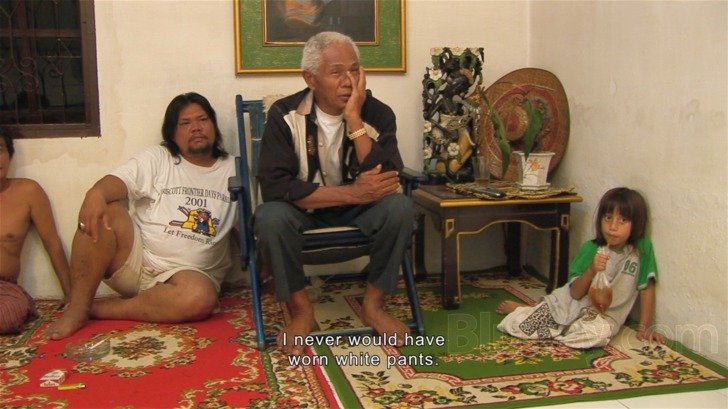
The picture above shows Anwar close to the begining of the documentary, watching himself as he acted out a killing on the rooftop where many others died. He states that he would have never worn white pants, and that he looks like he is going on a picnic. Even though this scene is before where he realizes the wrong he has done, we can still see the sorrow in his face.
This documentary gives a very strong sense of realness, because nothing is held back. Anwar and his friends are not shy to say that they killed happily. They loved it.
Alot of their inspiration came from American ganster films and actors, such as The Godfather and Al Pacino. It was such a great influence that they even dressed like they did and used their methods of killing.

No comments:
Post a Comment